The verdict: Test a small pilot when you have a credible story, production capacity, an active target audience, clear measurement, and an affordable learning budget. Public examples support testing; they do not establish predictable brand ROI.
Omdia estimated that the global microdrama market generated $11 billion in 2025 and forecast $1.5 billion in US revenue for 2026. These estimates describe the broader microdrama category, rather than TikTok alone.
Before committing budget, distinguish three uses of the format: branded entertainment, shoppable content, and drama publishing that earns revenue from viewers or ads. This guide compares the evidence, access requirements, pilot costs, and measurement for each.
Jump to a section
What TikTok Mini-Dramas Are
A TikTok mini-drama is a serialized story told through short vertical-video episodes, with a continuing narrative that encourages viewers to return.
Mini-dramas compress soap-opera pacing into vertical video. A standalone ad centers on one message or action; an episodic story gives viewers a reason to return across a continuing arc.
Branded episodic entertainment uses a continuing story to build attention, brand recall, or consideration. Distribution can include a brand or creator account, a publisher, or retailer channels. The brand funds or sponsors the story; viewers need not pay for episodes.
Shoppable TikTok content adds product tags and a purchasing route to the story. Its commercial objective is product sales, measured through commerce reporting and a wider attribution plan.
Monetized drama publishing earns money when viewers unlock content through payment or ads. TikTok offers Drama Center and a Mini Program route for this model. Growth Max promotes eligible drama content toward its own revenue events. These routes do not turn every branded series or TikTok Shop video into a Growth Max campaign.
Recurring characters, tone, and narrative continuity require dedicated planning and review across the whole series.
Brand Campaigns: What’s Publicly Reported
Crocs launched Charmed to Meet You on ReelShort in February 2026, before Déjà Shoe on TikTok Shop in June. Marketing Dive reports the chronology.
Campaign example
Crocs: from story to shopping
Watch Episode 1Episode 1 of Crocs’ Déjà Shoe, with TikTok Shop product tags built into the story.
The Crocs and SuperOrdinary announcement describes Déjà Shoe as a seven-part shoppable series with episode product tags, developed and produced in under four weeks. It shows how a brand can combine a short production schedule with in-episode shopping.
Here’s how recent branded series compare across distribution and publicly reported results.
| Brand / series | Distribution / partner | Publicly reported evidence |
|---|---|---|
| Crocs / Charmed to Meet You | ReelShort; February 2026 | Nearly 10M views; sequel reported |
| Crocs / Déjà Shoe | TikTok Shop; June 2026 | Shoppable episodes; sales and ROI not disclosed |
| JCPenney / El amigo de mi novio es millonario | TelevisaUnivision partnership | 16M+ impressions; 5.6M video views |
| P&G / Rico’s Tacos | Albertsons YouTube, social, and in-store channels | Shopper-insight-led production; outcome metrics not disclosed |
| Native / The Golden Pear Affair | Branded series; specific distribution not established by the cited report | 50 episodes; outcome metrics not disclosed |
| Gushers / Screen Time sponsorship | Hoorae, TikTok, and PineDrama | Finale integration; sponsor-specific results not disclosed |
Source: Marketing Dive, July 7, 2026. These are different distribution and funding models. The cited reporting does not disclose brand sales or ROI. Views, impressions, and a sequel are engagement or commissioning signals, not proof of profitability, returning viewers, or Growth Max performance.
Creative Principles to Test
Start with a story viewers can follow, with product integration that serves the scene. Treat the following as creative hypotheses to test, not rules demonstrated by every campaign.
A mini-drama episode
One possible story structure
- 1
Hook
Create a question
- 2
Build the conflict
Raise the stakes
- 3
Product moment
Fit the story naturally
- 4
Cliffhanger
Make them come back
Make the opening understandable without sound, use captions, and test hooks that establish the character or conflict quickly. The first few seconds are a useful focus for testing.
Start with brief episodes and compare runtimes using completion, watch time, and the campaign’s business objective. Let the results guide the next edit.
Choose a production style that fits the story, audience, and budget. Test polished and informal treatments rather than assuming one will perform better.
Set episode-level targets before scripting and a review after episode three. Compare engagement and business metrics separately; the measurement section explains what each can establish.
Should Your Brand Test a Pilot?
Score readiness across five criteria: narrative fit, production capacity, measurable objectives, audience activity, and test budget. An older audience can be active on TikTok; verify actual activity and interest rather than using age as a proxy.
For branded entertainment, define a brand or engagement objective. For shoppable content, define product sales and attribution. For monetized drama publishing, confirm eligible access and drama revenue reporting before using Growth Max.
Should your brand invest in TikTok mini-dramas?
Check what your team can confirm today. Use the budget, production, and measurement sections below to resolve any gaps.
Your recommendation will appear here.
This is Sociallyin’s editorial readiness framework, not a validated ROI model. See the scoring explanation below.
How the readiness score works
How scoring works: The first, middle, and last answer in each question score 5, 3, and 0 points. With essentials ready, 18–25 suggests a pilot; 10–17 suggests test-and-learn; 0–9 suggests pause. A zero on any criterion overrides the total to Pause. An unresolved production, measurement/access, or budget condition caps the result at Test-and-Learn.
These thresholds are Sociallyin’s editorial readiness framework, not a validated ROI model. A five-to-eight-episode pilot is one possible test design; it is not a required minimum.
When to Pause
Pause if you lack a credible story, production capability, audience evidence, measurable objectives, or an affordable test budget. For low-margin products, compare the full pilot cost with simpler creative before committing.
Build a Pilot Budget
Illustrative assumptions: five to eight vertical episodes, 60 to 90 seconds each, a small recurring cast, a limited set of locations, a planned release schedule, and a review after episode three. Adjust these to the story and distribution model. Request itemized quotes for the same scope, rights, and deliverables so you can compare the full cost of each option.
Total pilot budget = scripting + casting + production + editing + rights + distribution + measurement + an explicit contingency. Keep paid media separate from production and include applicable platform or development costs.
| Cost item | Main cost drivers | Ask the supplier to quote |
|---|---|---|
| Scripting | Arc, episode count, research, revisions | Treatment, all scripts, approval rounds, continuity checks |
| Casting | Cast size, shoot days, rehearsals | Talent fees, availability, agency fees, replacement terms |
| Production | Locations, crew, equipment, schedule | Shoot days, permits, travel, product handling, reshoots |
| Editing | Episode versions, captions, sound, graphics | Deliverables, aspect ratios, languages, revision rounds |
| Rights | Music, talent usage, ownership, paid amplification | Term, territory, licensing, creator permissions, renewal fees |
| Distribution | Creator placement, sponsorship, paid media, publishing route | Guaranteed placements, media budget, management fees; development/onboarding if needed |
| Measurement | Reporting, tracking, brand or sales studies | Data access, attribution method, dashboard, analysis, review time |
| Approach | What you fund | Tradeoff to price |
|---|---|---|
| Sponsorship | Integration or placement in an existing series | Less production work; clarify placement, brand safety, audience evidence, and reporting |
| Creator co-production | A shared creative project and distribution agreement | Episodic expertise; clarify ownership, approvals, paid usage, and revenue share |
| Owned series | Scripts, cast, production, rights, release, promotion, measurement | More control and responsibility; budget continuity, reshoots, and future reuse |
Compare quotes against the same episode count, deliverables, rights, release commitments, and reporting. Ask which costs are fixed, what changes after approvals, and what cancellation or reshoot work costs. Include a defined learning allowance and compare the full cost of each funding model.
Hypothetical Example: A Shoppable Pilot
Suppose a shoppable pilot costs $20,000 in total, including production, rights, paid distribution, and measurement. Each additional order contributes $40 after discounts, product costs, fulfillment, payment fees, and expected returns, but before the pilot cost. These are invented planning inputs, not supplier quotes or industry benchmarks.
Contribution break-even = $20,000 ÷ $40 = 500 additional orders.
Count incremental orders caused by the campaign; attributed orders alone do not establish that increase. This calculation checks whether order contribution covers the pilot cost, not whether the business earns a net profit. For branded entertainment, agree brand and audience objectives instead. For monetized publishing, compare net drama revenue with full content and promotion costs.
What Production Requires
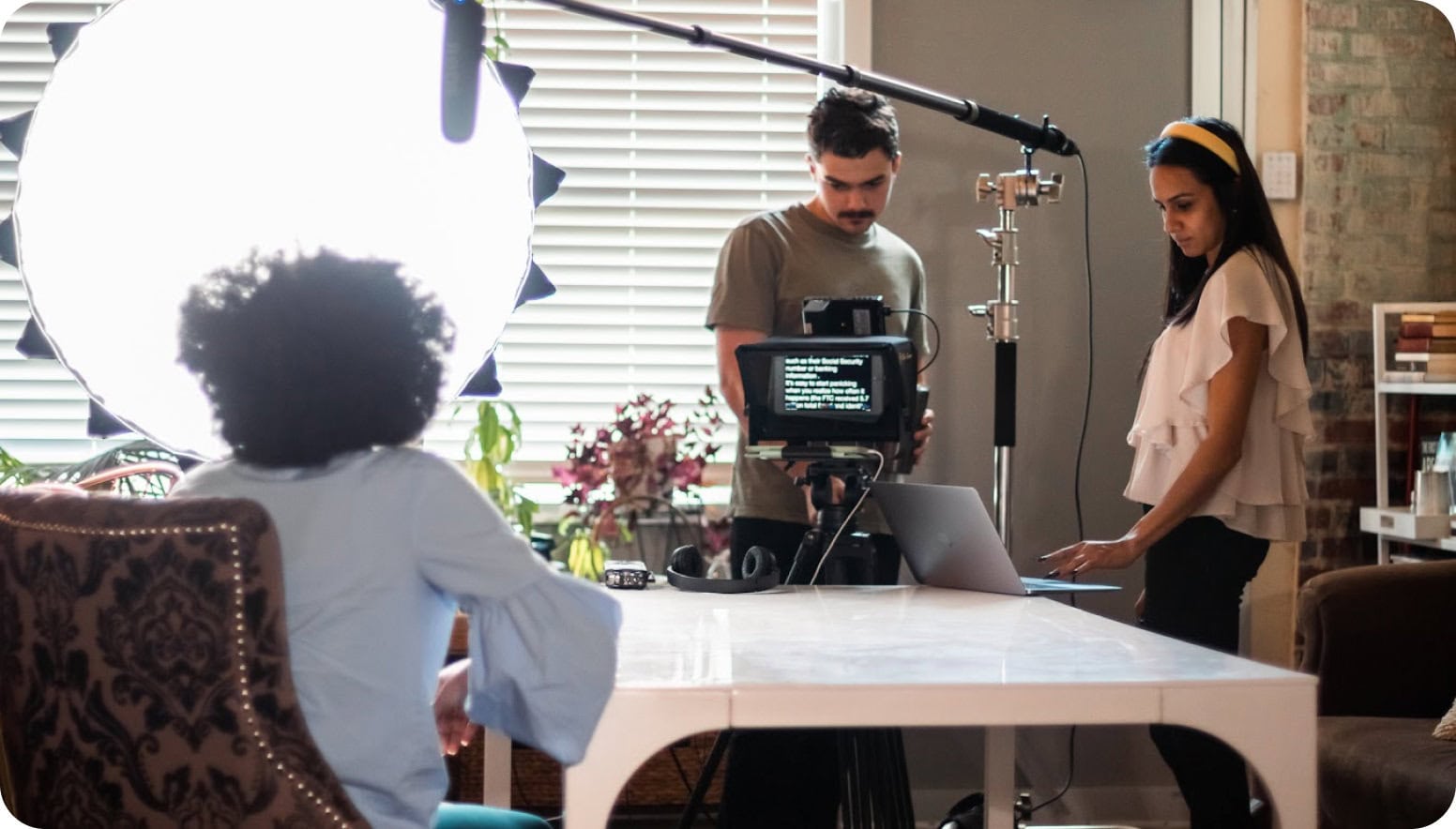
The production ask is closer to a mini TV writers’ room than a content shoot. You need a premise, lead characters, and a season shape before anyone books a camera. Sustaining a consistent narrative voice across episodes is the capability most in-house teams underestimate.
Follow a repeatable sequence from brief to first episode live.
- Define the campaign objective and choose branded entertainment, shoppable content, or monetized publishing. Confirm the relevant distribution access.
- Establish the narrative premise and lead characters around that objective and model.
- Choose an affordable story arc and testable runtime. Five to eight episodes of 60 to 90 seconds is an illustrative pilot assumption, not a proven minimum.
- Assign a capable in-house production team, hire an episodic production partner, or co-produce with an established drama creator.
- Script an opening that is understandable without sound, plan captions, and prepare alternative hooks to test.
- Prepare model-specific reporting and distribution. For Growth Max, confirm eligible publishing and drama monetization before campaign setup.
- Set episode-level and business KPIs, approve the learning budget, and schedule a review after episode three.
Take the Mini-Drama Launch Checklist With You
Use this four-page checklist to assess readiness, scope production, prepare your launch, and review performance.
Review Performance After Episode Three
Define success, the data source, the comparison period, and the action threshold before production. Use the metrics relevant to the chosen model; do not grade a sales campaign on views alone.
| Metric and definition | Source / limitation | Decision informed |
|---|---|---|
| Completion and watch time: how much of each episode people watch | TikTok video analytics; compare similar runtimes and paid/organic exposure | Test opening hooks, pacing, captions, and edits |
| Returning viewers: identifiable viewers who return across a defined period | Use a returning-viewer or cohort report where available; otherwise report it as unavailable | Assess continuing interest. Episode-two views / episode-one views is only a view-volume ratio, not same-viewer retention |
| Product sales: attributed orders, revenue, and margin after returns | TikTok Shop or commerce analytics, with a stated attribution window; use a comparison or holdout to assess incrementality | Decide whether shoppable content merits more spend |
| Drama monetization: paid episode value and content ad revenue | Publisher reporting and Growth Max reporting; distinguish D0 revenue from lifetime value and profit | Assess monetized publishing against content and promotion costs |
| Incremental reach or lift: additional audience or outcomes caused by the campaign | Deduplicated cross-channel measurement or a suitable controlled study; reach totals alone do not prove lift | Assess added reach or brand impact beyond the baseline |
After episode three, review engagement alongside the relevant business result and spending. If the series is already filmed, you can change trailers, opening edits, captions, thumbnails, release timing, product placement presentation where editable, and paid distribution. Changing the plot or cast may require reshoots and new rights approvals.
Use the findings to adjust the remaining release and decide whether to fund another arc. A pause in paid promotion does not erase committed production costs; agree the review options before filming.
Lessons from Douyin
Dao Insights documents sponsorship and product integrations by Kans (Han Shu), Proya, and Marubi in China. Daxue Consulting describes Kans collaborating with drama creators on Douyin. These examples show approaches to commissioning and distribution, rather than proving which categories will perform best on TikTok.
Use the Chinese market as creative context. Audience behavior, commerce infrastructure, and attribution differ; reported brand-wide sales cannot automatically be attributed to a particular drama.
| Dimension | Douyin context | TikTok planning implication |
|---|---|---|
| Brand examples | Beauty-brand sponsorship and integration documented in the sources above | Test narrative fit and audience activity; do not assume category leadership transfers |
| Creator model | Established drama creators can supply episodic expertise | Compare sponsorship, co-production, and an owned series |
| Commercial model | Product placement, sponsorship, and shopping-related activity can coexist | Separate product sales from drama purchase and ad revenue |
| Series length | Formats and lengths vary | Choose an affordable pilot arc; five to eight episodes is a planning suggestion, not a platform minimum |
Publishing Routes: Drama Center and Minis Center
TikTok announced global availability for Drama Center and ten markets for Minis Center in June 2026: the United States, Canada, Australia, New Zealand, Indonesia, Thailand, South Korea, Japan, Brazil, and Mexico. Confirm current market and account eligibility before commissioning content. Availability is not automatic publisher approval.
| Feature | Drama Center | Minis Center / Mini Program |
|---|---|---|
| Access | Publisher onboarding and an authorized TikTok account | Developer onboarding, compliance checks, development, and release review |
| Content host | Series published directly in TikTok | Mini Program within TikTok |
| Viewer access | Episodes discovered in the feed; more content can unlock through ads | Later episodes unlock through ads or payment |
| Revenue | Drama ad revenue | Drama ad revenue and paid episode access |
| Growth Max | Eligible Drama Series | Eligible Mini-Drama programs |
What access and setup require
Drama Center: Create an organization, verify the business, supply matching vendor and payment details, receive approval, and sign the required contract before uploading. Associate a TikTok account with the relevant Series permissions.
Mini Program: Register a developer organization and app, complete business and publisher reviews, configure monetization, develop and debug the program, then submit the code package for review and release. US launches have additional protected-data eligibility requirements.
Use TikTok’s publishing instructions and your account representative to confirm the route, permissions, timeline, and responsibilities.
Growth Max for Drama Publishers
Growth Max is TikTok’s automated promotion product for eligible monetized drama content, called “Growth Max: Micro-series” in its current help documentation. Its September 2026 documentation lists D0 Purchase value and D0 Ad revenue value as optimization events, with Target ROAS or Highest Value bidding. D0 means Day 0.
Here, purchase value concerns drama purchases and ad revenue concerns content monetization. App installs and TikTok Shop product purchases require campaign objectives and reporting suited to those goals.
Validate the eligible content, monetization reporting, and campaign setup before paying to promote it.
In its June 29, 2026 announcement, TikTok reported 52% more incremental audience reach beyond off-platform acquisition campaigns and a 10x increase in advertiser scale when on-platform dramas and off-platform apps were promoted together.
Both figures use TikTok’s internal global campaign data from April 2026. They are not independently verified benchmarks, a forecast of product sales, or a guarantee for a branded pilot.
Frequently Asked Questions
Conclusion: Start With an Affordable Pilot
Agree the objective, full costs, rights, and episode-three review before committing. If the essential capabilities and learning budget are ready, test an affordable story arc; resolve any blocker first.

Plan a Measurable Episodic Campaign
Sociallyin’s Paid Social team can help align your creative test, distribution, and reporting with the campaign’s business objective.