The annual tension between Memorial Day sales and solemn remembrance poses one of the year’s most significant marketing challenges. This weekend presents a major commercial opportunity, yet it exists in direct conflict with the holiday’s true purpose: to honor and mourn military personnel who died serving our country.
Finding the right Memorial Day marketing ideas for social media is harder than it looks; brands either ignore the day entirely, post a generic tribute, or inadvertently come across as exploitative by forcing an unnatural connection between their products and military sacrifice.
Your audience can always spot the difference between authentic remembrance and a thinly veiled sales pitch, and the backlash is often swift.
Successfully managing the holiday requires a clear framework built on integrity. This approach begins with knowing when to plan your content and how to strike the right tone for every message.
It also involves running separate remembrance and promotional campaigns, using platform-specific strategies that build trust, and measuring the metrics that truly matter. When done right, you can honor the moment and connect with your audience without compromising respect.
Why Memorial Day Marketing Is One of the Trickiest Moments of the Year
Memorial Day presents a unique and delicate challenge for businesses. It is a solemn federal holiday established to honor U.S. military personnel who lost their lives in service, yet it has also become the unofficial cultural kickoff to summer. This dual identity is the primary reason so many brands struggle to get their marketing right.
Managing the tension between respectful remembrance and commercial promotion requires a level of sophistication that few other holidays demand.
The Dual-Identity Problem: Remembrance vs. Summer Kickoff

At its foundation, Memorial Day is about mourning and remembrance; a day reserved for honoring fallen soldiers.
Simultaneously, the long weekend has evolved into a nationwide celebration of summer’s arrival, marked by barbecues and major retail sales. This forces business owners to ask a difficult question: How do you participate in the commercial energy of the weekend without demeaning the holiday’s true meaning?
A message that leans too heavily into celebration can feel disrespectful, while one that is purely somber may not align with a brand’s promotional goals.
What Brands Get Wrong (And Why It Backfires)
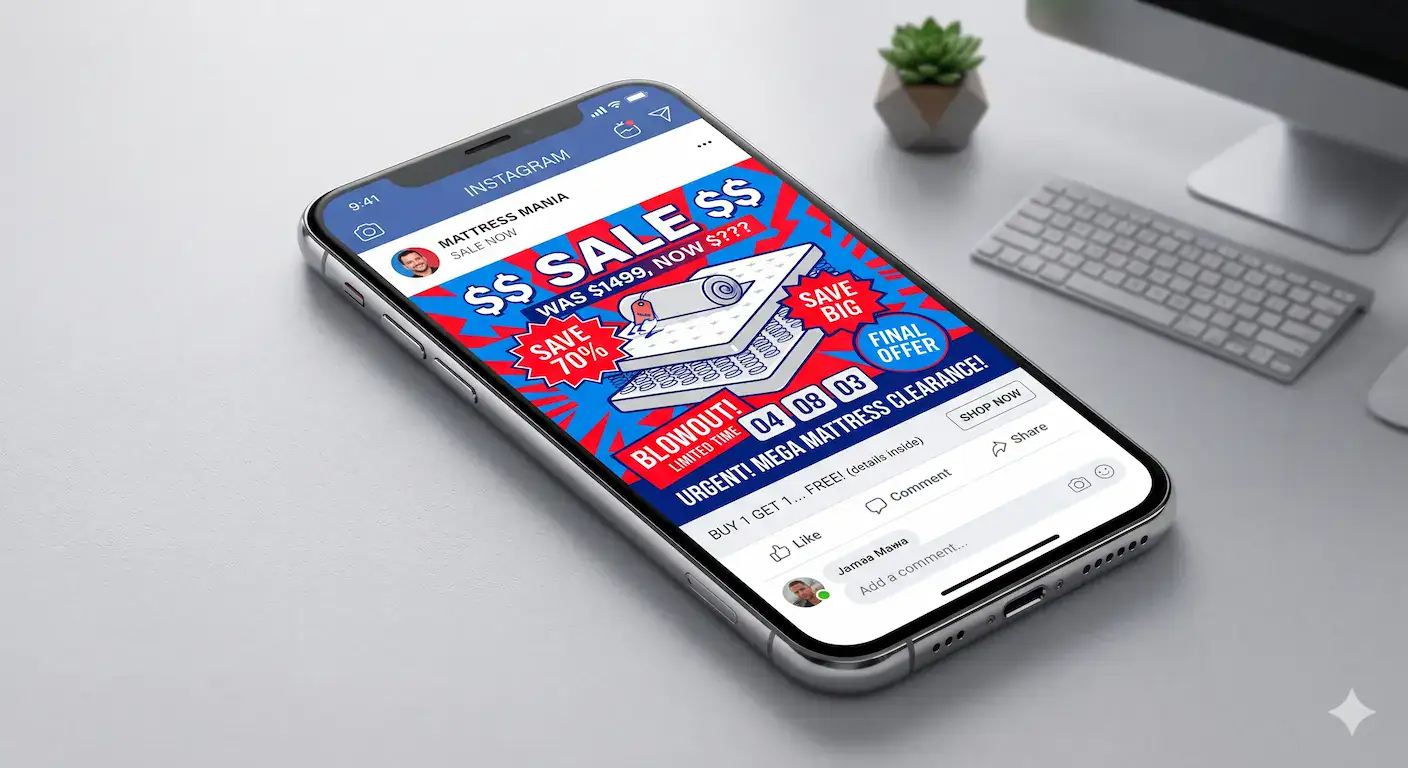
The path to a Memorial Day marketing misstep is paved with common errors.
One of the most frequent blunders is confusing Memorial Day with Veterans Day, which honors all who have served. A post thanking living veterans on Memorial Day, while well-intentioned, misses the point of the holiday entirely.
Another major pitfall is an inappropriate tone.
Using celebratory phrases like “Happy Memorial Day” is widely considered insensitive, especially by military families and veterans. This disconnect often leads to public backlash from consumers, actively damaging brand perception and eroding customer trust.
Authentic vs. Exploitative: Why Your Audience Always Knows
Today’s consumers can quickly identify when a brand’s message feels opportunistic or insincere. Tying a discount directly to military sacrifice, for example, with messaging that implies a sale is in “honor” of the fallen, is a clear example of exploitation.
Authenticity, however, comes from a place of genuine respect. Consider these approaches:
- Separate Tributes and Promotions: Post a simple, heartfelt message of remembrance on Monday, completely detached from any commercial call to action. Run “Summer Kickoff Sale” content on the days leading up to the holiday, not alongside the tribute.
- Support Military Families: A portion of the proceeds from the weekend could be donated to a reputable charity that supports the families of fallen service members.
- Focus on Community: Instead of a sale, highlight community events or share educational content about the holiday’s history.
Your audience understands you are a business, but they expect you to act with integrity. When you prove you can, you build the kind of long-term trust that a simple weekend sale can never achieve.
Before You Post Anything: Build Your Memorial Day Campaign Framework
Successful Memorial Day marketing doesn’t happen by accident. The brands that handle this holiday with grace and effectiveness do so because they plan. A reactive, last-minute post is where tone-deaf mistakes are made.
By building a simple framework beforehand, you can ensure your messaging is intentional and respectful.
Research shows that key consumer emotions tied to Memorial Day are patriotism (44%) and gratitude (42%). This approach isn’t about creating more work; it’s about making your efforts more effective and protecting your brand’s reputation.
When to Start, What to Schedule, and When to Stop Promoting
Effective campaigns are built weeks in advance, not the day before. A strategic timeline allows you to align your inventory and promotional messaging with natural buying patterns. Many businesses find a phased approach works best:
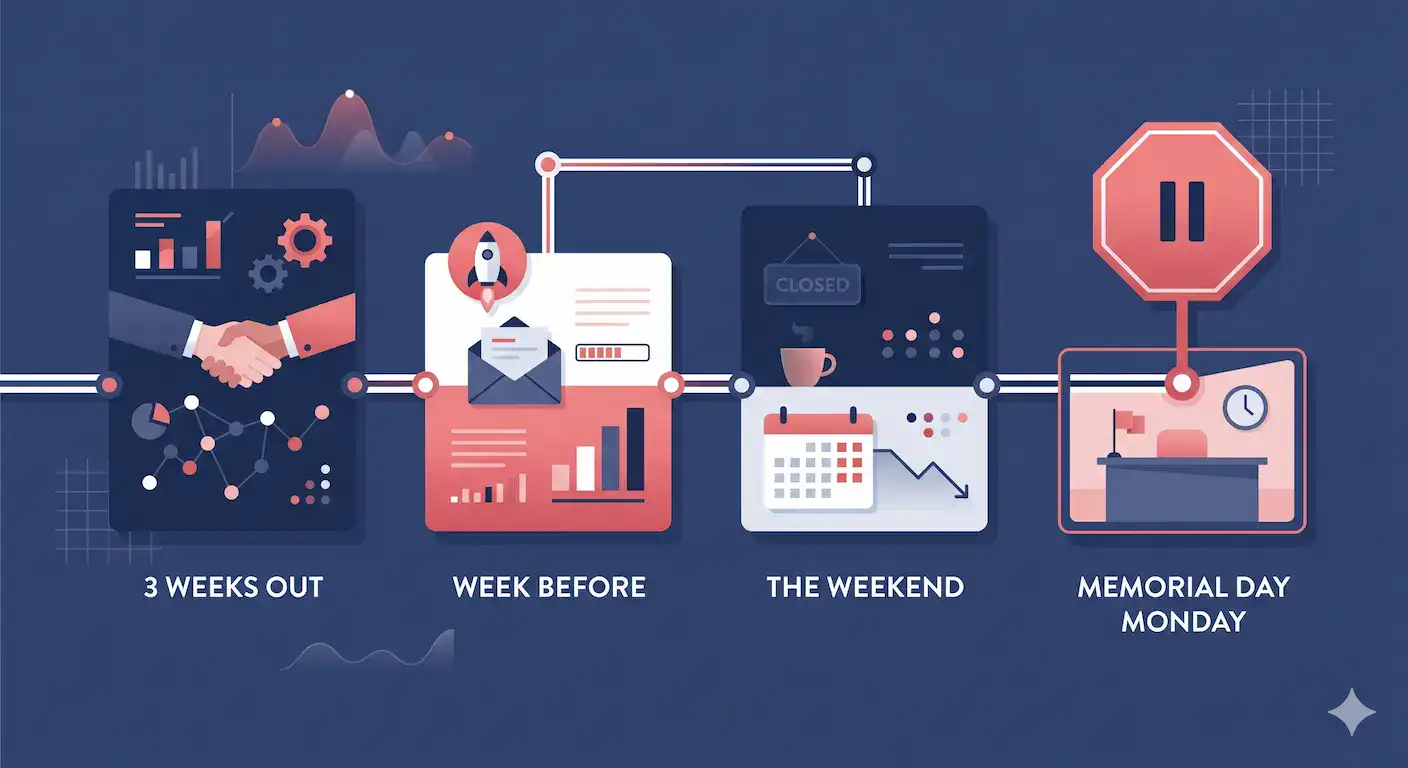
- 2-3 Weeks Out: The Hype Phase. Start teasing your “Summer Kickoff” sale or event. Use email and social media to build anticipation, but do not mention Memorial Day itself.
- The Week Before: The Launch Phase. Officially launch your promotion on Tuesday or Wednesday before the long weekend. This gives customers ample time to shop before their holiday plans begin.
- Friday to Sunday: The Promotional Peak. Continue promoting your sale with a summer-focused theme. Share user-generated content and highlight specific products in a celebratory tone.
- Memorial Day (Monday): The Hard Stop. All promotional content must stop. Your marketing for the day should be limited to a single, non-promotional tribute post, reserving your social media for remembrance.
Running Two Campaigns at Once: Remembrance Content vs. Promotional Content
The key to avoiding the holiday’s central conflict is to treat your marketing as two separate, parallel campaigns. Think of them as distinct streams of communication that should never cross.
Your promotional campaign is your “Summer Kickoff Sale.” It runs from the week before through Sunday with upbeat messaging focused on summer activities to drive commercial goals. This campaign lives on your social channels, in your email marketing, and in your paid ads.
Your remembrance content is a single, thoughtfully crafted tribute post scheduled for Monday morning. It has no call to action, no discount code, and no link to your website. Its sole purpose is to pause and honor the meaning of the day.
Define Your Campaign Goal Before You Create a Single Post
Before you design a single graphic or write a single caption, you must define what you want to achieve. A clear goal acts as a filter for every decision you make, ensuring your Memorial Day social media strategy is tied to tangible business outcomes.
Is your primary objective to clear out spring inventory to make room for new summer products? Perhaps you want to use the weekend to launch a new collection and build brand awareness. Defining your goal helps you measure success accurately.
An inventory goal focuses on sell-through rates, while a brand awareness goal tracks metrics like reach and follower growth.
Without a specific goal, you are simply creating noise. A focused objective ensures your efforts contribute directly to your bottom line.

Build a Campaign Worth Being Proud Of.
Get a Memorial Day strategy that honors the moment and delivers real results.
What to Say on Memorial Day: Getting the Tone Right
With a clear plan, your focus can shift to execution.
On a day with such emotional weight, knowing what to say on Memorial Day is crucial, as the specific words you choose define your message. A single misstep can make a brand appear insensitive or opportunistic, undermining customer trust.
Getting the tone right is about more than avoiding negative comments. It is an opportunity to communicate with integrity and build lasting conviction in your brand through thoughtful, well-crafted social media content.
The “Happy Memorial Day” Trap and Other Phrasing Pitfalls
Perhaps the most common misstep brands make is wishing their audience a “Happy Memorial Day.” This phrase is widely seen as inappropriate. The holiday is a solemn day of mourning, not a celebration.
It is designated specifically to honor military personnel who died while serving in the U.S. Armed Forces. Many businesses find this distinction helpful: Veterans Day honors everyone who has served, while Memorial Day is reserved for remembering those who made the ultimate sacrifice.
To avoid this pitfall, steer clear of celebratory language. Instead, opt for phrases that convey respect and reflection. Simple, sincere messages are always the most effective.
- Instead of: “Happy Memorial Day!”
- Try: “This Memorial Day, we remember and honor the brave individuals who gave their lives for our country.”
- Instead of: “Hope you’re having a great Memorial Day weekend!”
- Try: “On Memorial Day, we pause to honor our fallen heroes.”
Tribute Post vs. Promotional Post: How to Tell the Difference
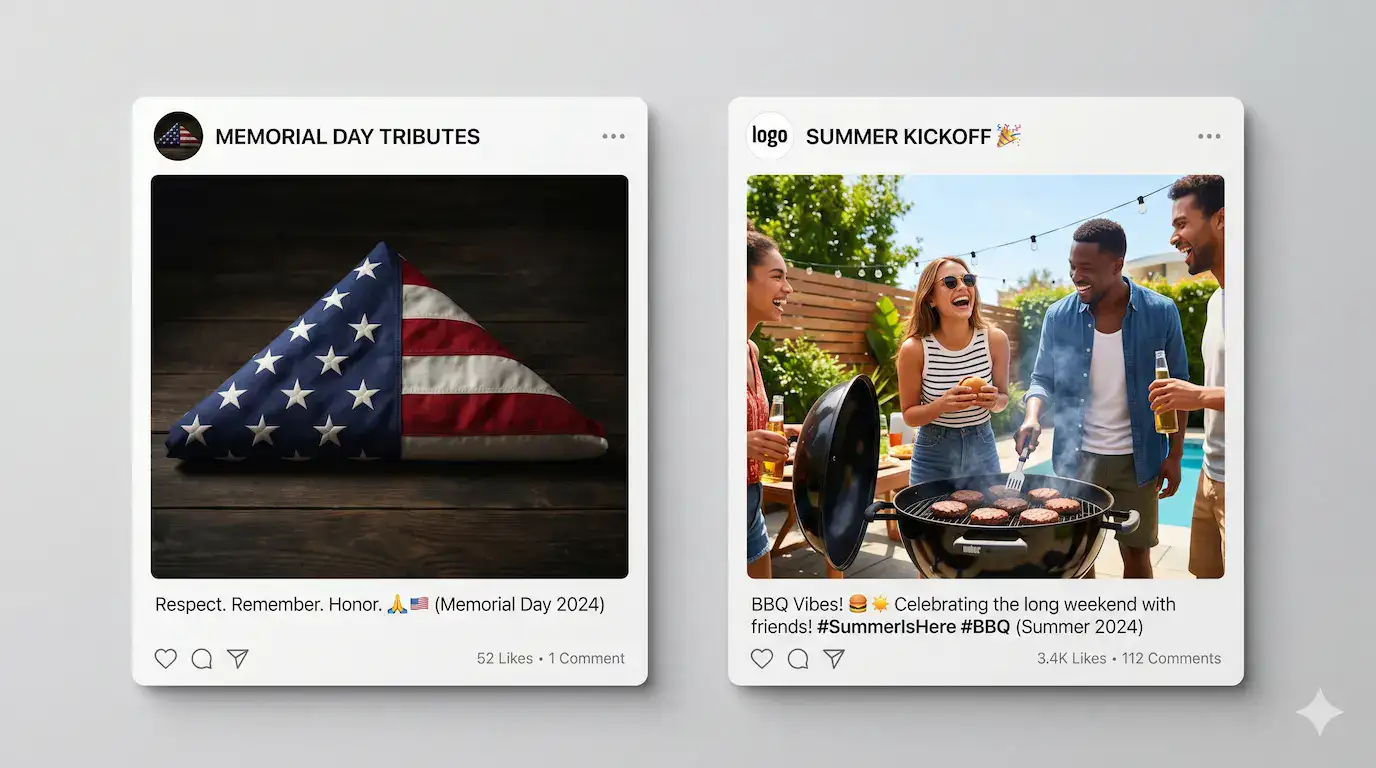
It is essential to keep your tribute and promotional content completely separate. Understanding the distinct purpose of each post type is the key to executing this strategy correctly and respectfully.
A tribute post is selfless. Its sole purpose is to show respect and honor.
- Tone: Somber, respectful, and sincere.
- Language: Uses phrases like “Remember and Honor,” “In Remembrance,” or “Honoring Their Sacrifice.”
- Visuals: Features simple, respectful imagery, such as an American flag or the red poppy, the official flower of remembrance.
- Call to Action: There is none. A tribute post should never include a discount code, a link to a sale, or a request to “shop now.”
A promotional post is business-focused. Its purpose is to support your commercial goals for the holiday weekend.
- Tone: Upbeat and aligned with the start of summer.
- Language: Focuses on themes like “Kickoff to Summer,” “Long Weekend Savings,” or “Hello, Sunshine.”
- Visuals: Bright, energetic, and product-focused, showing how your offerings fit into summer activities.
- Call to Action: Clear and direct, such as “Shop the Sale,” “Get Your Weekend Gear,” or “Use Code SUMMER25.”
Friday–Sunday vs. Monday: Why the Day Itself Is Different
Your marketing tone should intentionally shift as the weekend progresses. Friday through Sunday are the appropriate days for summer-themed promotional content. During this time, your audience is often in a weekend mindset, planning trips and shopping.
Your “Summer Kickoff” messaging aligns with their activities and expectations. Monday, however, is different. As a federal holiday dedicated to remembrance, its tone is somber.
All promotional messaging should conclude by Monday morning. Your brand’s social media presence on this day should be limited to a single, pre-scheduled tribute post. This simple act demonstrates that your business understands and respects the day’s true meaning and value.
Consider the National Moment of Remembrance Act, which asks all Americans to pause at 3:00 PM local time for a moment of silence. This powerful detail highlights the day’s solemnity, reinforcing that Monday’s focus is on commemoration, not commerce.
Memorial Day Social Media Posts: Ideas Organized by Objective
With a clear framework and the right tone, you can begin creating your Memorial Day social media posts. Every post you publish should serve a distinct purpose.
Many businesses falter by trying to make a single post do everything: honor the fallen, announce a sale, and start a conversation. This diluted approach often fails to connect.
Let’s explore how to create separate, focused posts for each goal, ensuring every message is clear, respectful, and effective.
Posts That Honor: Tribute and Awareness Content That Builds Trust
These posts are about showing up with integrity. Their sole purpose is to acknowledge the meaning of Memorial Day, and they should be completely free of commercial intent.
Think of this as a long-term investment in brand trust, not a short-term sales play. When customers see your brand act with principle, it strengthens their loyalty far beyond a single transaction.
Here are two effective approaches:
- A Simple, Respectful Tribute: This is the most common and appropriate method. Scheduled for Monday, it should feature a non-promotional image—like an American flag, the red poppy symbol, or a local memorial—paired with sincere copy. Phrases like “Today, we remember and honor their sacrifice,” convey the right sentiment.
- Announce a Charitable Partnership: Pledging to donate a percentage of the weekend’s sales to a military or veteran-focused charity demonstrates tangible commitment. This approach connects your commercial activity to a cause without making your primary tribute post feel like an advertisement.
Posts That Engage: Community-First Content That Starts Conversations
Engagement-focused content performs best in the Friday-to-Sunday window. Your audience is settling into the long weekend, creating an opportunity to connect around the shared experience of the “unofficial start of summer.”
The goal is to build a sense of community and provide genuine value by actively engaging with your audience and paying attention to what they’re saying:
- Host Interactive Content: A summer-themed giveaway is a great way to generate excitement. Encourage followers to enter by sharing their weekend plans or tagging friends. You can also use polls or questions to ask about their favorite Memorial Day traditions, from go-to BBQ recipes to parade memories.
- Share Helpful, Niche-Specific Guides: This positions your brand as a useful resource. A hardware store might share “Top 5 Grilling Tips,” while a fashion brand could create a guide on “Packing for a Weekend Getaway.” This builds a relationship that extends beyond a simple purchase.
- Feature User-Generated Content (UGC): Ask customers to share photos of how they’re using your products during their celebrations. Highlighting their experiences acts as powerful social proof and turns satisfied customers into vocal brand advocates.
Your Audience Is Talking. Are You Listening?
Never lose a loyal fan or meaningful moment to an unanswered comment.
Posts That Convert: Promotional Content That Doesn’t Cross the Line
Driving sales during this key commercial weekend requires a delicate balance. The key is to ensure your promotional content is clearly separated from any message of remembrance and is confined to the Friday-Sunday timeframe.
Thoughtful execution protects your brand’s integrity while supporting your revenue goals.
- Frame Your Promotion Carefully: A “Kickoff to Summer” sale aligns with the consumer mindset without co-opting the solemnity of Monday. Use festive, patriotic graphics, but avoid forcing a connection between your discount and military remembrance. Your call to action should be clear and direct.
- Offer an Exclusive Military Discount: Providing a special offer for veterans, active-duty military members, and their families is a direct and authentic way to show gratitude. You can promote this offer throughout the weekend, highlighting it as a specific thank-you to those who have served.
- Highlight a Relevant Product: Consider featuring a “Product of the Weekend” that aligns with common activities like outdoor gatherings or travel. This makes your promotion feel timely and helpful rather than purely opportunistic.
Memorial Day Social Media Strategy: What to Post on Each Platform (And What to Avoid)
A thoughtful Memorial Day strategy considers not just what you post, but where you post it. Each social media platform operates with its own unique audience and distinct communication norms. A message that connects on Instagram might feel out of place on LinkedIn.
With social media activity often increasing by 30% to 50% during the holiday weekend, tailoring your content is essential. This approach helps you connect with customers authentically while protecting your brand’s reputation. Let’s explore how to identify the channels that matter most to your business.
Instagram: Reels, Stories, and Feed Posts That Work
Instagram is a visual-first platform, making it well-suited for both bold weekend promotions and solemn tributes. The key is to keep these two distinct themes separate.
- For the Weekend (Friday–Sunday): Use Instagram Stories for informal, timely content. Polls about favorite BBQ foods or quizzes on summer trivia can build lighthearted engagement. Use Reels to create short, energetic videos that showcase a “Kickoff to Summer” sale or feature a product perfect for the weekend. Your main feed posts should feature high-quality, festive graphics for your promotional campaigns.
- For Memorial Day (Monday): The feed is the appropriate place for your official tribute. Post a single, high-quality static image. This is not the moment for carousels, videos, or busy graphics, as simplicity conveys respect. A simple, elegant visual with a concise, heartfelt caption is the most effective approach. We advise against using Stories for a tribute, as the format’s temporary nature can feel dismissive of the day’s meaning.
Facebook: Building Community and Driving Local Engagement
Facebook’s primary strength lies in its ability to build and nurture a sense of community. For Memorial Day weekend, this presents an opportunity to connect with your local audience on a deeper level.
Use your page to share information about community events, like local parade schedules or remembrance ceremonies. This action positions your business as an integrated part of the community, not just another retailer.
It is also the ideal platform to announce partnerships with local veterans’ organizations or share details about a military and veteran discount. On Monday, a simple, heartfelt tribute post will appeal to the platform’s broad demographic.
TikTok: Authentic Participation Over Polished Production
For many brands, TikTok is the most challenging platform for Memorial Day. Its culture is built on trends, humor, and unfiltered authenticity, meaning a polished corporate message can feel jarring.
Success on TikTok requires genuine participation, not just broadcasting a pre-approved statement.
Avoid any content that feels like a slick advertisement. Instead, consider a more human approach that aligns with the platform’s tone.
A short, quiet video of a local memorial or a flag at half-staff can be powerful in its simplicity. If you have team members with military connections who are comfortable sharing, a simple, unscripted moment of reflection can be very effective.
If you have no authentic connection to make, it is better to remain silent on TikTok for the day to protect your brand’s integrity.
LinkedIn: The Platform Most Brands Forget on Memorial Day
While it may seem counterintuitive, LinkedIn is a valuable channel for Memorial Day communication. The context here shifts from consumer sales to corporate values and social responsibility.
Use LinkedIn to highlight your company’s support for the military community. This is the perfect place to announce a corporate donation to a military charity or spotlight employees who are veterans (always with their explicit permission).
You could also share a thoughtful post from company leadership about the importance of service. In practical terms, this reinforces your brand’s values to your professional network, potential employees, and business partners.
Paid Social: How to Amplify Your Memorial Day Campaign Without Overspending
Paid social media advertising is essential for maximizing your weekend sales, but it requires careful management to be effective and appropriate.
Run your promotional ads from Friday through Sunday, targeting audiences based on interests relevant to your sale. For example, a home goods store could target users interested in “grilling” or “patio furniture.”
Here’s why this matters: you should pause all promotional ad campaigns on Monday. Running a cheerful “25% Off!” ad next to content about a day of solemn remembrance creates a significant brand safety risk and is likely to attract negative feedback.
By pausing your campaigns for 24 hours, you demonstrate respect for the occasion and ensure your marketing budget is spent effectively.
Reach the Right People at the Right Moment.
Run Memorial Day ads that drive results without putting your brand at risk.
Memorial Day Hashtags: How to Tag for Tribute Without Hijacking the Moment
Hashtags are a powerful tool for increasing visibility on social media. Industry data shows that posts including them can receive significantly more interaction than those without. On Memorial Day, however, this power comes with a responsibility to protect your brand’s integrity.
Using the wrong hashtag can position your business as insensitive, quickly eroding the customer trust you’ve worked hard to build.
The key is to recognize that two very different conversations happen online during this time. Your hashtag strategy must thoughtfully respect that division.
Tribute Hashtags vs. Promotional Hashtags: Know the Difference
The most critical principle for Memorial Day content is to never mix remembrance with revenue in your hashtags. Attaching a sales-focused post to a tribute hashtag is a misstep known as “hashtag hijacking.” This practice is one of the fastest ways to attract negative feedback.
Audiences use specific tags to find and share content honoring fallen service members, and seeing a product promotion in that feed feels deeply out of place.
Here’s a clear framework for keeping them separate:
- Tribute Hashtags (For Monday’s Posts Only): These are reserved for non-promotional, solemn content that honors the meaning of the day. They should never appear on a post that mentions a sale, product, or discount.
- Examples: #MemorialDay, #HonorTheFallen, #RememberAndHonor, #GoSilent.
- Promotional Hashtags (For Friday–Sunday Posts): These tags signal to users that your content is related to the holiday weekend, sales, or the start of summer. They help connect your offers with audiences actively looking for them.
- Examples: #MemorialDayWeekend, #MemorialDaySale, #MemorialDayDeals, #SummerKickoff.
How to Build a Branded Memorial Day Hashtag Campaign
Beyond using generic promotional tags, creating a unique hashtag for your weekend sale offers a distinct strategic advantage. A tag like #[YourBrand]SummerSale or #[YourBrand]MDW2026 creates a dedicated digital space for your campaign.
This approach delivers several business benefits. It allows you to:
- Track Performance: Easily measure the specific reach and impact of your promotion.
- Encourage Community: Create a hub for user-generated content as customers share their purchases.
- Maintain Respect: Keep your commercial activity separate from the solemn conversations happening elsewhere.
In practical terms, a branded hashtag gives you a clear, measurable signal of your campaign’s return on investment.
How Many Hashtags to Use on Instagram, TikTok, and Facebook
The optimal number of hashtags varies by platform. Using the right amount ensures your content feels native to each environment and performs effectively.
- Instagram: Aim for a mix of 5–15 hashtags. Combine broad promotional tags (like #MemorialDaySale) with niche tags relevant to your industry (like #OutdoorGear or #PatioDecor). This strategy helps you reach both a wide audience and customers with specific interests.
- Facebook: On this platform, less is more. Use 1–3 highly relevant hashtags. Facebook’s algorithm prioritizes the substance of the post and the conversations it creates, so a long list of tags is unnecessary.
- TikTok: Hashtags are essential for discovery on the For You Page. Use 3–5 hashtags that mix broad topics with specific ones related to your video. This helps the algorithm categorize your content and show it to interested viewers, maximizing your potential reach.
Memorial Day Campaign Results: How to Measure What Actually Matters
After a holiday weekend, it’s natural to focus on a single number: sales. But for a campaign as sensitive as Memorial Day, that approach only reveals part of the story. True success is found in understanding both the financial return and the impact on your brand’s reputation.
A well-executed campaign strengthens customer trust. A misstep, however, can alienate your audience, regardless of revenue. Here’s how to measure what truly matters.
Engagement, Reach, and Sentiment: The Metrics That Tell the Real Story
Your tribute post was about connection, not conversion. Its success should be measured by the trust it builds, which requires looking at a different set of metrics.
- Engagement (Likes, Comments, Shares, Saves): This shows if your message resonated. A high number of shares and saves on a tribute post, for instance, indicates your audience found it meaningful enough to pass on or revisit.
- Reach (Unique Viewers): This measures how many individual accounts saw your content. For a remembrance post, the quality of that reach is more important than the quantity; you want to connect with your main audience.
- Sentiment (The Tone of Comments and Mentions): This is the clearest indicator of your campaign’s integrity. Are comments appreciative, or are they critical?
Positive sentiment confirms you handled the holiday with the respect your audience expects. This qualitative feedback, found in comments and direct messages, provides essential context that raw numbers cannot.
How to Read Your Numbers and Know What They’re Actually Telling You
For your promotional content, the focus shifts to connecting marketing efforts with business outcomes. Look beyond total revenue to understand the true health of your campaign through proper performance analysis.
First, calculate your conversion lift. Compare sales during the campaign to a similar non-promotional period to see the actual increase your marketing drove.
While industry benchmarks suggest a 4-6% e-commerce conversion rate during holiday events, it’s crucial to track this by channel. Did most sales originate from email, paid social, or organic search? This data is essential for future budget allocation.
Equally important is your Cost Per Acquisition (CPA). Ad space is more competitive and expensive during holidays, so a high sales volume with an unsustainable CPA can erode your profit margins.
Monitor this alongside your Return on Ad Spend (ROAS) to ensure your campaign was profitable.
In summary, analyze your audience metrics. What was the ratio of new to returning customers? A successful campaign should attract new buyers while also strengthening relationships with your loyal base, improving long-term customer value.
The 48-Hour Rule: When to Review Your Memorial Day Campaign Data
Resist the urge to analyze performance in real time. Social media algorithms continue distributing content for hours after posting, and many customers complete purchases days after first seeing an ad.
Pulling numbers too early gives you an incomplete, and often misleading, picture of your campaign’s true performance.

Instead, follow a structured review timeline:
- 48 Hours After Memorial Day Monday: Run your first check-in. At this point you have enough data to assess the sentiment on your tribute post — are the comments positive, neutral, or critical? You can also review top-line ad performance: impressions, clicks, and preliminary conversion numbers from the weekend. This is a temperature check, not a full analysis.
- One Week Later: This is when your detailed performance review should happen. By day seven, all platform data has settled, delayed conversions have been captured, and your email attribution window has closed. Pull your full metrics across every channel — paid social, organic, email, and direct — and compare them against the goals you defined in Section 2.3. Did an inventory-focused campaign move the right products? Did a brand awareness campaign grow your following or reach new audiences?
- Year-Over-Year Comparison: If this is not your first Memorial Day campaign, compare this year’s results against last year’s equivalents — not industry benchmarks. Your own historical data is the most accurate performance baseline you have because it accounts for your specific audience, brand positioning, and seasonal patterns.
The 48-hour rule exists for a simple reason: patience in analysis produces better decisions. Brands that wait for complete data make smarter budget calls for the next holiday cycle.
Your Numbers Are Telling You Something.
Find out what drove results — and where to invest smarter next time.
Frequently Asked Questions
Conclusion
Addressing Memorial Day presents a clear challenge for businesses: how to balance sincere remembrance with the realities of a major retail weekend. The most effective approach is not to choose between silence and sales.
True success lies in intentional planning, where genuine respect serves as the foundation for both your tribute and your promotional content.
Consumer behavior data confirms that audiences reward brands that demonstrate authentic social responsibility, especially during commemorative holidays.
By thoughtfully separating remembrance from retail and leading with integrity, you mitigate brand risk, build lasting customer trust, and prove that your brand’s values are more than words on a website.
Ultimately, a well-executed Memorial Day strategy is not a liability to be managed. It is a powerful opportunity to connect with your audience on a deeper level and highlight the principles your business stands for.