
Case Study · Bearpaw
$22,742 in holiday ad spend. $178,171 back. The ten weeks that decide a boot brand’s year.
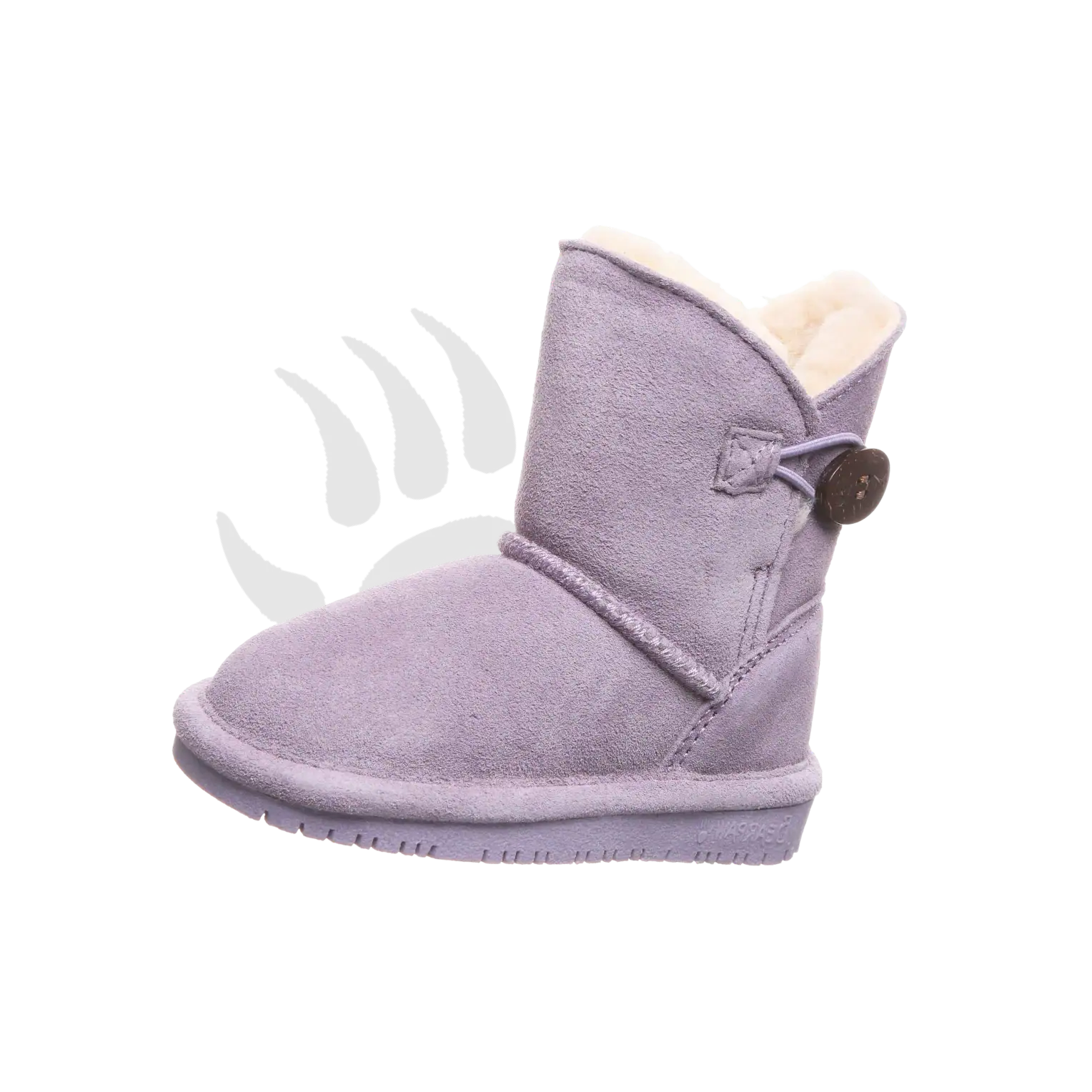
Bearpaw sells sheepskin boots, and it built that business on retail shelves. In October 2019 the brand hired Sociallyin to make its own e-commerce pull its weight. One winter of Facebook and Instagram ads later: 2,431 tracked purchases on $35,977 in spend, a 5.72x blended return. The season inside the season is the story. The ten reported holiday weeks ran at 7.83x. The best of them hit 12.61x.


5.72x
Blended ROAS, full winter

7.83x
ROAS, ten holiday weeks

2,431
Tracked purchases, FB pixel

CLIENT
Bearpaw Footwear

Industry
Footwear · Seasonal E-Commerce

Engagement
Paid Social · FB + IG · Oct 1, 2019 – Mar 2020

Offering this proves
Paid Social Advertising
01
THE STUCK POINT
The boots sold everywhere except their own website.
Bearpaw makes sheepskin boots and slippers, and it grew up as a wholesale brand: big retailers, big shelf space, boots moving every winter. The channel that lagged was its own. E-commerce was a catalog people browsed, not a store people bought from, and in the fall of 2019 the brand came to us with one ask: make it a sales channel.
The catalog has a hard constraint: nobody wants shearling in April. The demand curve is a spike, not a slope, and the revenue year is effectively decided between the first cold snap and the last gift-shipping day of December. That shape punishes ordinary media buying twice. Spend flat through the year and you waste money in the warm months while underfeeding the cold ones. Chase the season late and you pay peak-auction prices to reach buyers who already bought at retail.
The diagnosis: the problem was never demand. Bearpaw’s demand fills retail aisles every winter. It exists for about ten weeks, and most ad accounts are built as if every week were the same.

Retail-first brand
Big shelves, no e-comm engine
~10-week window
First cold snap → last gift ship day
Browsed, not bought
A catalog, not a store
02
THE BET
Retarget the catalog. Buy the cold.
We didn’t ask for a new creative library. Bearpaw already had one, product video, influencer content, a catalog full of assets shot for retail. What we rebuilt was everything underneath it: new campaign architecture, new bidding strategy, new targeting.
No prospecting moonshots. No brand-lift theater. Catalog and cold, and a weekly report with a section most ad reports don’t have: a purchase map of the states where the weather had turned.
Two engines. One winter calendar.

Dynamic Catalog Retargeting
Launched Oct 21, every dollar chased people who had already touched a Bearpaw product instead of strangers scrolling past one.
Cold-Weather Targeting
Live Nov 12, a duplicate engine pointed at states where the temperature had dropped. When it got cold there, the ads followed.
Comment Coverage
We helped Bearpaw’s team build an engagement strategy so every comment on every ad got a response on a set timeline. Purchase ads that answer their own comments convert better than ones that go quiet.
The Thermometer Map
Weekly reports tracked purchases by cold-weather state: Ohio, Illinois, Minnesota, Wisconsin, Indiana, reading the season correctly.
03
THE WORK
One winter, run like a season,
not a schedule.
Oct 21
Dynamic Retargeting · Catalog Sales launches
The core engine of the winter: the full product catalog, served back to people who had already shown intent. Ran every reported week from launch.
The engine
Nov 12
Cold Weather Areas goes live
The same catalog engine, duplicated and aimed at states where the temperature had dropped. Weekly reporting tracked purchases by cold-weather state from this point.
The thermometer
All season
Category discipline + reworked assets
Women’s footwear carried the account; men’s, kids’, socks, hats and scarves held small budgets and earned more only when their weekly ROAS did. Influencer content and product video the brand already owned were cut for catalog and retargeting placements instead of commissioned from scratch.
The portfolio · The inputs
Jan 6–8
Valentine’s Day Giveaway + Together Cozy launch
Shoulder-season brand awareness plays that kept the audience warm after the gift buying stopped, at giveaway-level budgets, not December-level ones.
The shoulder
February
The cut
As the season died, weekly spend stepped down from $2,294 → $1,338 → $735 → $416. We kept the retargeting pilot light on and put the rest of the money away.
The discipline
Mar 8
The Relaunch
Vegan Collection catalog campaign plus a fresh retargeting engine, built for the next cycle instead of squeezing the last one.
The next season
04
The Inflection
The week of December 9, the engine hit 12.61x.
The ramp is visible week by week. The first reported week, October 21–27: 73 purchases at $17.35 each, a 5.58x return. The first week of December: 273 purchases at $9.03 each, 9.64x. Then December 9–15: 372 purchases at $6.58 apiece, a 12.61x return on $2,447.71 of spend.
Nothing about the budget changed that week. The catalog engine had spent seven weeks learning who buys, the cold-weather engine had four weeks of geography under it, and December supplied the urgency. Efficiency is what patience looks like in an ad account.
Week of December 9–15, 2019 · Bearpaw weekly report

05
THE PROOF
One winter of receipts.
Every figure below traces to one of the 20 weekly performance reports sent to Bearpaw between October 2019 and March 2020. Purchases are Facebook-pixel tracked; revenue is reconstructed weekly as reported ROAS times reported spend.
$17.35

$6.58
Cost per purchase, first week vs. peak week
5.58x
12.61x
ROAS, first week vs. peak week
Paid Social, Counted In Dollars, Full Winter · Oct 21, 2019 – Mar 12, 2020
Metric
Result
Details
B
Metric
Blended ROAS
5.72x
Result
$35,976.57 spend → $205,943 tracked revenue
Details
P
Metric
Tracked purchases
2,431
Result
$14.80 blended cost per purchase
Details
I
Metric
Impressions
2.58M
Result
48,876 link clicks · 1.9% CTR
Details
R
Metric
Weekly reports
20
Result
Every number on this page traces to one
Details
The Harvest Window, Oct 21 – Jan 5
Metric
Result
Details
H
Metric
Holiday ROAS
7.83x
Result
$22,741.58 spend → $178,170.97 revenue
Details
C
Metric
Cost per purchase
$11.13
Result
Across the ten reported holiday weeks
Details
D
Metric
December ROAS
9.49x
Result
Dec 2–29: 1,135 purchases, $9,815.63 spend
Details
R
Metric
Peak week ROAS
12.61x
Result
Dec 9–15: 372 purchases at $6.58 each
Details
Methodology: two reports overlap by three days (Jan 20–26 and Jan 24–30); the overlapping week is excluded from full-run totals, so full-winter figures are conservative. One week (Oct 28–Nov 3) has no report in the set and is likewise uncounted.
06
THE UNLOCK
ROAS isn’t won in the auction. It’s won in the calendar.
The auction never changed, same platforms, same catalog, the same assets Bearpaw already owned. What changed was the architecture underneath them and where the dollars landed: on people who had already touched the products, in states where the temperature had dropped, in the weeks when a warm boot is an easy yes.
And when the season died, we acted like it. Spend came down 82% across February. It went back up on March 8 with a reason: a new vegan collection and a fresh retargeting engine, built for the next window instead of squeezing the last one.
A seasonal brand doesn’t need an always-on ad account. It needs an agency that knows which ten weeks decide the year.
$205,943
Tracked purchase revenue, one winter
82%
February spend cut once demand died
2,431
Purchases, Facebook-pixel tracked
5.72x
Blended ROAS across the engagement
2.58M
Impressions · 1.9% link CTR
20
Weekly reports, every figure sourced
Sell something the calendar controls?
We run paid social the way seasons actually behave: retargeting engines built early, spend that follows the weather, and the discipline to cut when the buying stops. Let’s plan your window before it opens.
Ready to Maximize Your Social Media
Potential?
We’d love to hear about your organization’s goals on social media. Get in touch with us today!
If submitting a RFP please use the email below.